Why Is My Roof Turning Green? (And What It Really Means)
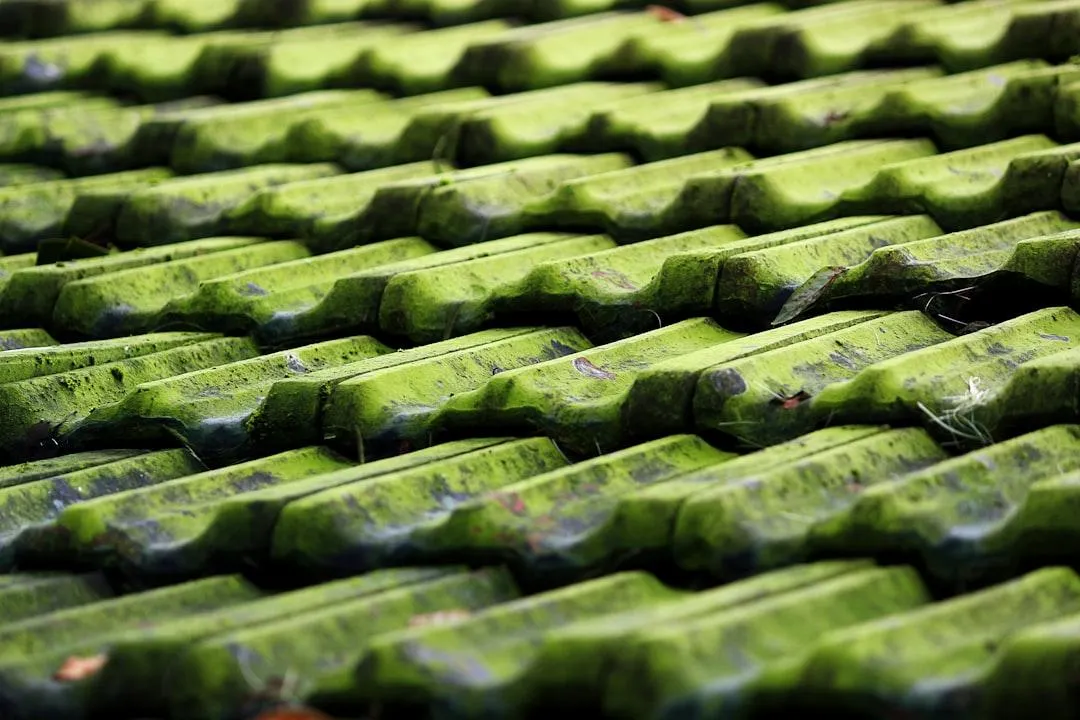
If your roof is starting to turn green, it’s not just a cosmetic issue—it’s a sign of organic growth that can damage your roof over time.
Most homeowners assume it’s just dirt or staining, but in reality, that green colour is usually caused by moss, algae, lichen, or even mould.
In this guide, we’ll break down what’s causing your roof to turn green, how to identify it, and what to do before it leads to costly damage.
What Causes a Roof to Turn Green?
Green buildup on your roof is typically caused by moisture + shade + organic growth.
Roofs that don’t get much sunlight, or are surrounded by trees, create the perfect environment for growth to thrive.
Over time, this leads to visible discolouration—and more importantly, underlying damage.
1. Moss (The Most Common Cause)
Moss is one of the main reasons roofs turn green.
It appears as soft, thick, green clumps that grow across tiles or shingles.
Why it’s a problem:
Holds moisture against your roof
Leads to rot and deterioration
Can lift tiles and cause leaks
Moss spreads quickly in damp, shaded areas, which is why it’s so common on residential roofs.
2. Algae (Often Looks Green or Black)
Algae usually shows up as streaks or stains.
While it’s often black, it can also give your roof a greenish tint—especially in early stages.
Why it’s a problem:
Feeds on roofing materials
Spreads across large areas
Makes your roof look aged and dirty
3. Lichen (The Most Damaging Type)
Lichen is often mistaken for moss, but it’s much more aggressive.
It forms crusty, greenish patches that are firmly attached to your roof.
Why it’s a problem:
Embeds into roofing materials
Breaks down the surface over time
Extremely difficult to remove without proper treatment
What Is Lichen on Your Roof? (And Why It’s More Damaging Than You Think)
4. Mould or Mildew
In some cases, green patches may be mould or mildew.
This typically occurs in areas with high moisture and poor airflow.
Why it’s a problem:
Indicates excess moisture
Can spread to other parts of your home
May impact air quality
Why Green Growth Shouldn’t Be Ignored
No matter what type of growth it is, the problem is the same:
It traps moisture and slowly damages your roof.
What starts as a green tint can turn into:
Structural damage
Roof leaks
Expensive repairs
Signs Your Roof Needs Cleaning (And Why You Shouldn’t Ignore Them)
Can You Remove Green Growth Yourself?
Most homeowners try to fix this with pressure washing.
But that’s where things go wrong.
High-pressure cleaning can:
Damage tiles
Strip protective coatings
Push water under your roof
And it often doesn’t fully remove the root cause—so the growth comes back.
The Right Way to Fix a Green Roof
The key isn’t just removing what you see—it’s killing the growth at the source.
Softwashing uses specialised treatments to:
Eliminate moss, algae, and lichen
Prevent regrowth
Protect your roofing materials
Roof Washing | Why You Should Consider Softwashing
How to Prevent Your Roof From Turning Green Again
Once your roof is cleaned properly, you can slow future growth by:
Trimming overhanging trees
Improving sunlight exposure
Keeping gutters clean
Scheduling regular roof cleaning
Key Takeaways
A green roof is usually caused by moss, algae, lichen, or mould—all of which can damage your roof over time.
These growths thrive in moisture and shade, and ignoring them can lead to serious structural issues.
The safest and most effective way to remove and prevent green buildup is through proper roof cleaning using softwashing.
Get Professional Roof Cleaning Done Right
If your roof is turning green, it’s best to deal with it early before the damage spreads.
Get a free quote here or
Contact us at 0483 953 484
Email: [email protected]
